Who Should You Call First for Water Damage: Plumber or Restoration Company?
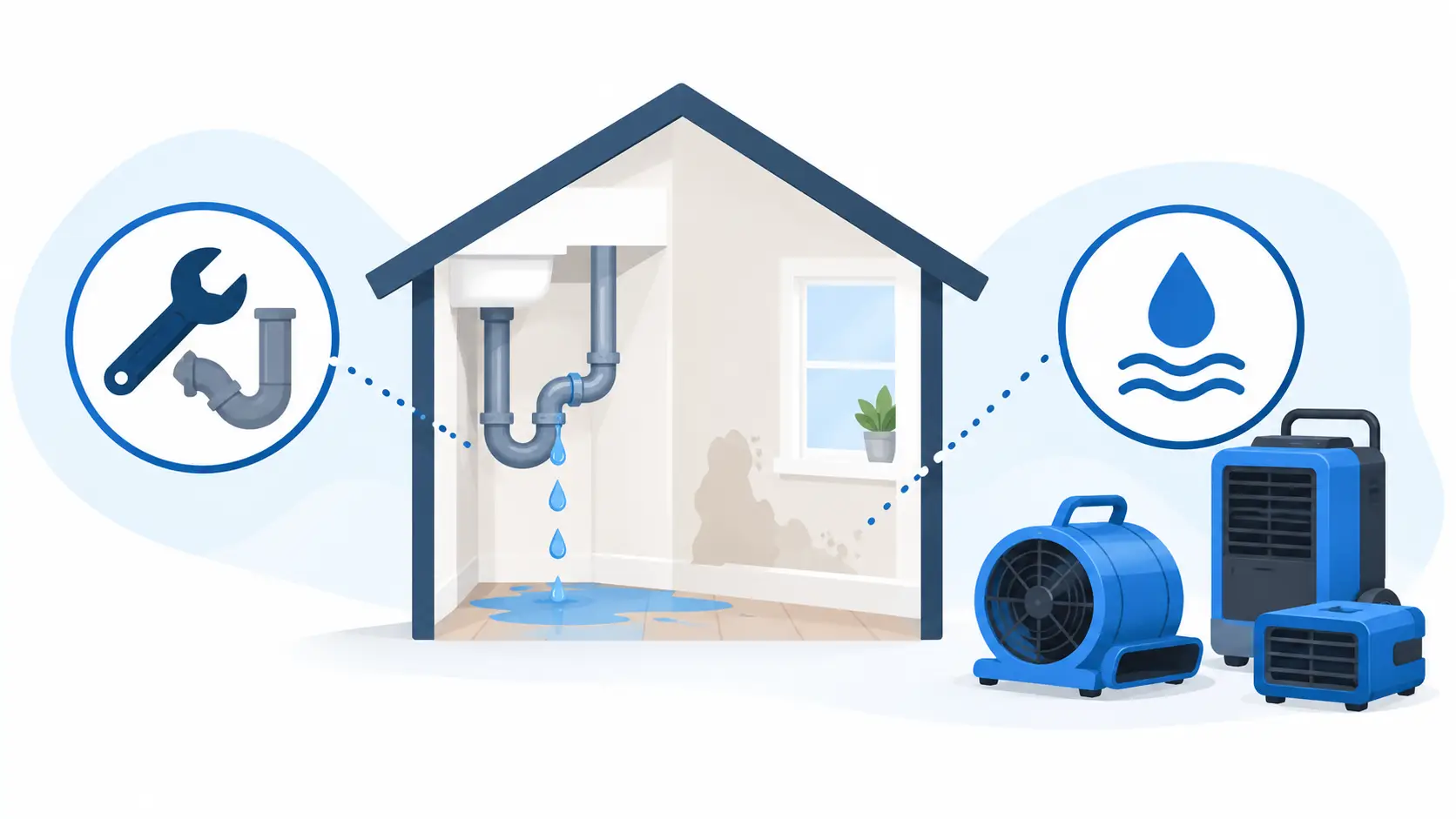
You find water spreading across the floor, dripping through the ceiling, or soaking into a wall. The first question is usually simple: do you call a plumber or a water damage restoration company?
The answer depends on what is happening.
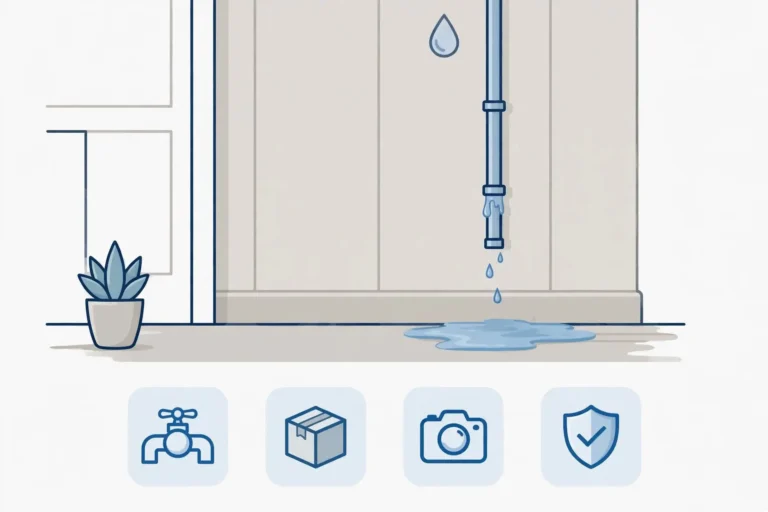
If water is still coming from a broken pipe, leaking valve, or another plumbing problem, you need a plumber to repair the source.
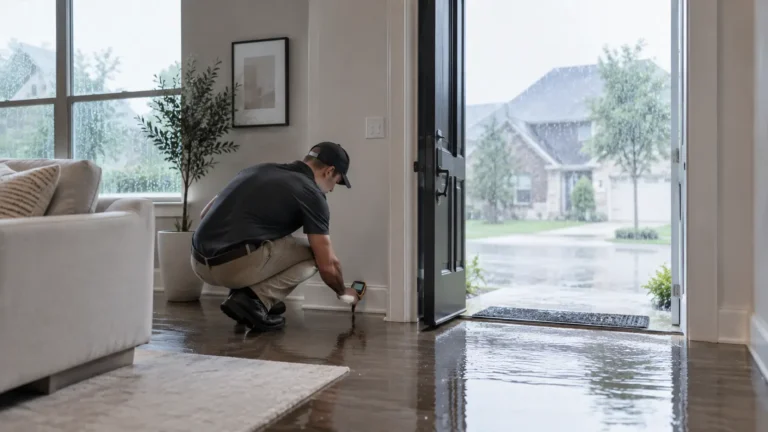
If water has already soaked into flooring, drywall, ceilings, cabinets, or other building materials, you may also need a water damage restoration company to remove the water, check for hidden moisture, and dry the affected areas properly.
In many cases, homeowners need both.
A simple way to think about it is:
The plumber stops the plumbing problem. The restoration company handles the damage the water left behind.
If it is safe to do so, shut off the affected fixture or your home’s main water supply while help is being arranged. Once the water source is under control, the next priority is finding out how far the moisture has spread and starting the drying process.
That matters because water can move beyond the area you can see—under flooring, behind drywall, inside cabinets, or into ceiling cavities.
For Grapevine homeowners, the goal should not be deciding which company is “better.” It is figuring out which problem needs attention first—and whether you actually need both professionals.
The guide below will help you make that decision quickly.
Plumber or Restoration Company? Use This Quick Decision Guide
If you are standing in a wet room trying to decide who to call, use this rule:
Call the person who can stop the source first, then deal with the water that has already entered the home.
Here is the practical breakdown:
| Water Damage Situation | Who to Call |
|---|---|
| Burst or leaking pipe | Plumber + restoration company |
| Leaking valve or plumbing connection | Plumber first |
| Water has soaked drywall, flooring, or ceilings | Restoration company |
| Water heater leak | Plumber, plus restoration if surrounding materials are wet |
| Toilet or sink overflow that will not stop | Plumber first |
| Overflow stopped, but water spread into the room | Restoration company |
| Water dripping through a ceiling from plumbing above | Usually both |
| Appliance supply-line leak | Plumber or appliance repair professional, plus restoration if water spread |
| Roof leak or rainwater intrusion | Roofer/building professional + restoration company |
| Sewage or contaminated water | Restoration professional |
The key difference is simple:
A plumber fixes the plumbing problem. A restoration company deals with the water damage caused by that problem.
For example, if a pipe bursts behind a wall, repairing the pipe solves the source of the leak. But it does not remove moisture from the drywall, insulation, flooring, or framing around it.
That is where restoration work starts.
If you are unsure who to call first, ask yourself two questions:
- Is water still actively coming from a plumbing source?
If yes, a plumber may need to stop or repair it. - Has the water already reached building materials?
If yes, you should also consider a water damage restoration company.
In many real water damage situations, the answer is not plumber or restoration company.
It is both — for two different parts of the problem.
What a Plumber Actually Handles
A plumber’s job is to fix the source of a plumbing-related water problem.
That usually means repairing or replacing the part that is allowing water to escape.
A plumber may be the right first call when you have:
- a burst or leaking pipe;
- a failed shutoff valve;
- a leaking plumbing connection;
- a damaged supply line;
- a plumbing fixture that will not stop leaking;
- a water heater plumbing leak;
- an active leak inside a wall or ceiling.
The important thing to understand is that a plumber focuses on the plumbing system itself.
For example, if a supply pipe breaks behind a wall, the plumber can locate the failure and repair the pipe.
But once that water has soaked the drywall, insulation, flooring, baseboards, or framing, the problem has moved beyond plumbing.
Signs You Should Call a Plumber First
A plumber should usually be one of your first calls when:
- water is still actively flowing from a pipe or plumbing fixture;
- you can clearly see where the plumbing leak is coming from;
- a valve or connection has failed;
- shutting off one fixture does not stop the leak;
- the plumbing system needs to be repaired before the water can be controlled.
If you can safely shut off the affected fixture or the home’s main water supply, do that while arranging help.
One mistake homeowners sometimes make is assuming the job is finished once the leak stops.
It is not always.
Fixing the pipe stops new water from entering the home. It does not automatically remove the moisture already trapped inside building materials.
If the leak reached walls, floors, ceilings, cabinets, or insulation, the next step is usually to assess and dry those areas properly.
What a Water Damage Restoration Company Actually Handles
A water damage restoration company handles the damage the water has already caused inside the property.
Once water reaches drywall, flooring, ceilings, insulation, cabinets, or other building materials, simply stopping the leak is not enough.
The next job is to find out where the moisture went and what needs to be dried, removed, or monitored.
A restoration company may handle:
- standing water extraction;
- moisture checks in walls, floors, and ceilings;
- drying wet structural materials;
- dehumidification;
- air movement and drying equipment;
- removal of materials that cannot be safely dried;
- ongoing moisture monitoring;
- cleanup after the water source has been controlled.
The main goal is not just to make the surface look dry.
It is to reduce the moisture that may still be trapped inside the structure.
For example, a bathroom leak may leave the floor looking mostly dry after cleanup, while moisture is still sitting underneath the flooring or inside the ceiling below.
That hidden moisture can become a bigger problem if it is missed.
When a Restoration Company Should Be Called Quickly
You should consider calling a restoration company when:
- water has spread beyond a small, easy-to-dry area;
- drywall or ceilings are wet;
- flooring has absorbed water;
- water has reached cabinets or baseboards;
- the leak affected more than one room;
- water traveled from an upper floor to a lower floor;
- you are not sure how far the moisture has spread.
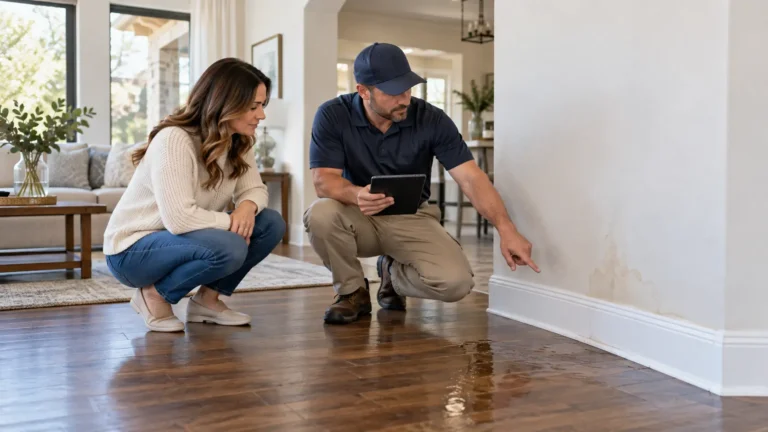
A professional restoration team can help determine the actual moisture footprint instead of relying only on what is visible.
That matters because visible water is often only part of the problem.
If you are dealing with water damage in a Grapevine home and the leak has already affected building materials, the next priority is not just cleanup. It is making sure the affected areas are properly checked and dried before the damage spreads further.
Why Fixing the Pipe Is Only Half the Job
Stopping the leak is essential, but it does not mean the water damage is over.
Water can move into materials that are not easy to see or reach. Even when the floor looks dry or the dripping has stopped, moisture may still be sitting inside the structure.
Common hidden areas include:
- behind drywall;
- under flooring;
- inside ceiling cavities;
- behind cabinets;
- around baseboards;
- inside insulation.
This is why surface cleanup can be misleading.
A towel, mop, or fan may dry what you can see while moisture remains deeper inside the material.
That matters because trapped moisture can lead to:
- swollen or damaged building materials;
- staining;
- odors;
- deterioration of drywall or flooring;
- mold growth if the area stays damp.
A Simple Example
Suppose a pipe leaks inside a bathroom wall.
The plumber repairs the pipe, and the visible water is cleaned up.
The room may look fine.
But if water has soaked into the drywall, insulation, or subfloor, those materials can stay wet long after the plumbing repair is finished.
That is why the next question should be:
Did the water only stay on the surface, or did it get into the structure?
If the answer is not clear, a moisture assessment is usually more useful than guessing.
For homeowners in Grapevine, this is especially important when water has traveled through a wall, ceiling, or flooring system. The visible damage may be limited, but the actual moisture footprint can be larger than it appears.
How Long Can You Wait Before Drying Water Damage?
The safest answer is: do not intentionally wait.
Once water has reached drywall, flooring, insulation, ceilings, or other porous materials, the drying process should begin as soon as practical.
EPA guidance recommends drying wet materials within about 24 to 48 hours where possible to help reduce the chance of mold growth.
That does not mean mold appears at an exact hour.
It means the longer materials stay damp, the greater the risk of secondary damage.
Why Delay Can Make the Problem Worse
Wet building materials can continue changing even after the leak stops.
You may start seeing:
- swollen baseboards;
- soft drywall;
- lifted or cupped flooring;
- staining;
- musty odors;
- moisture spreading into nearby materials.
A small leak that is handled quickly can stay relatively contained.
The same leak can become a larger restoration job if moisture sits inside the structure for too long.
What Grapevine Homeowners Should Do
If the plumbing source has already been repaired but the surrounding materials are still wet, do not assume the problem will solve itself.
The next step should be to determine:
What got wet, how far the moisture traveled, and whether those materials are drying properly.
That is usually more important than waiting to see if visible signs of damage appear later.
Plumber vs. Water Damage Restoration Company: The Bottom Line
If the problem is coming from the plumbing system, a plumber fixes the source.
If water has already spread into the home, a water damage restoration company handles the resulting damage.
That means:
- call a plumber for a burst pipe, failed valve, leaking connection, or another plumbing repair;
- call a restoration company when water has reached drywall, flooring, ceilings, cabinets, insulation, or other building materials;
- call both when a plumbing failure has already caused water damage.
The main question is not really:
“Plumber or restoration company?”
It is:
“Do I need the source repaired, the water damage handled, or both?”
If water has already spread into your Grapevine home and you are not sure how far the moisture has traveled, our water damage restoration team can inspect the affected areas and help determine the right next step.
FAQ’s
Should I call a plumber or water damage company for a burst pipe?
Usually, you need both.
Can a plumber clean up water damage?
A plumber may help with the plumbing problem, but significant water extraction, moisture assessment, and structural drying usually fall under water damage restoration.
Do I need restoration if the leak has already stopped?
Possibly.
Can water damage dry on its own?
Some surface moisture can evaporate on its own, but water trapped under flooring, behind walls, or inside other porous materials can remain much longer.
Should I call my insurance company before a restoration company?
If the situation is urgent, do not delay reasonable steps to protect the property from further damage.
Document the damage with photos or video when it is safe to do so, then contact your insurance company according to your policy requirements.
For larger losses, it can help to keep records of the source, affected areas, cleanup work, and repairs.
Who should I call if I do not know where the water is coming from?
Start with what you can observe safely.
If you suspect a plumbing leak, a plumber may need to locate and repair the source.
If water has already spread into walls, floors, or ceilings, a restoration company can also assess the affected areas and moisture spread.
If you are dealing with water damage in Grapevine and are unsure what the next step should be, our restoration team can help assess the damage and point you toward the right type of repair.